
Drew Patterson · 21 October 2026
Decoding Custom Visitor Interaction Signals in Independent Digital Projects Through Tailored Data Frameworks
Independent digital projects rely on custom visitor interaction signals to understand engagement patterns that standard analytics packages often overlook, and tailored data frameworks provide the structure needed to interpret those signals without depending on third-party platforms. These frameworks collect granular details such as scroll depth, hover duration, and navigation sequences while respecting site-specific goals, allowing operators to map user behavior across standalone websites and applications. Researchers note that combining event tracking with contextual metadata produces clearer pictures of how visitors move through content layers.
Core Components of Visitor Interaction Signals
Visitor interaction signals break down into measurable actions that occur during a session, and custom setups capture variables like click coordinates, form field focus times, and exit intent triggers that generic tools aggregate at a higher level. Data indicates these signals gain value when filtered through project-specific rules, such as weighting return visits differently from first-time entries or isolating mobile versus desktop patterns. Observers note that independent projects benefit when frameworks assign priority scores to signals based on conversion paths unique to each site rather than industry averages.
Building Tailored Data Frameworks
Tailored frameworks start with defining event schemas that match the project's content structure, then layer in storage solutions that keep raw logs separate from processed aggregates. Experts have observed that open-source libraries combined with server-side processing reduce reliance on external scripts and maintain control over data retention periods. As of October 2026, several independent operators report integrating lightweight databases that handle real-time aggregation while supporting export formats compatible with statistical software packages.
Implementation Steps for Independent Sites
Implementation begins with auditing existing page elements to identify which HTML components generate the most meaningful signals, followed by embedding tracking scripts that respect consent banners and regional data regulations. Teams then test signal accuracy across browsers and devices before scaling to full deployment, and ongoing validation checks ensure the framework adapts when site layouts change. Figures from digital measurement reports show that projects using staged rollouts encounter fewer discrepancies between expected and recorded interactions.
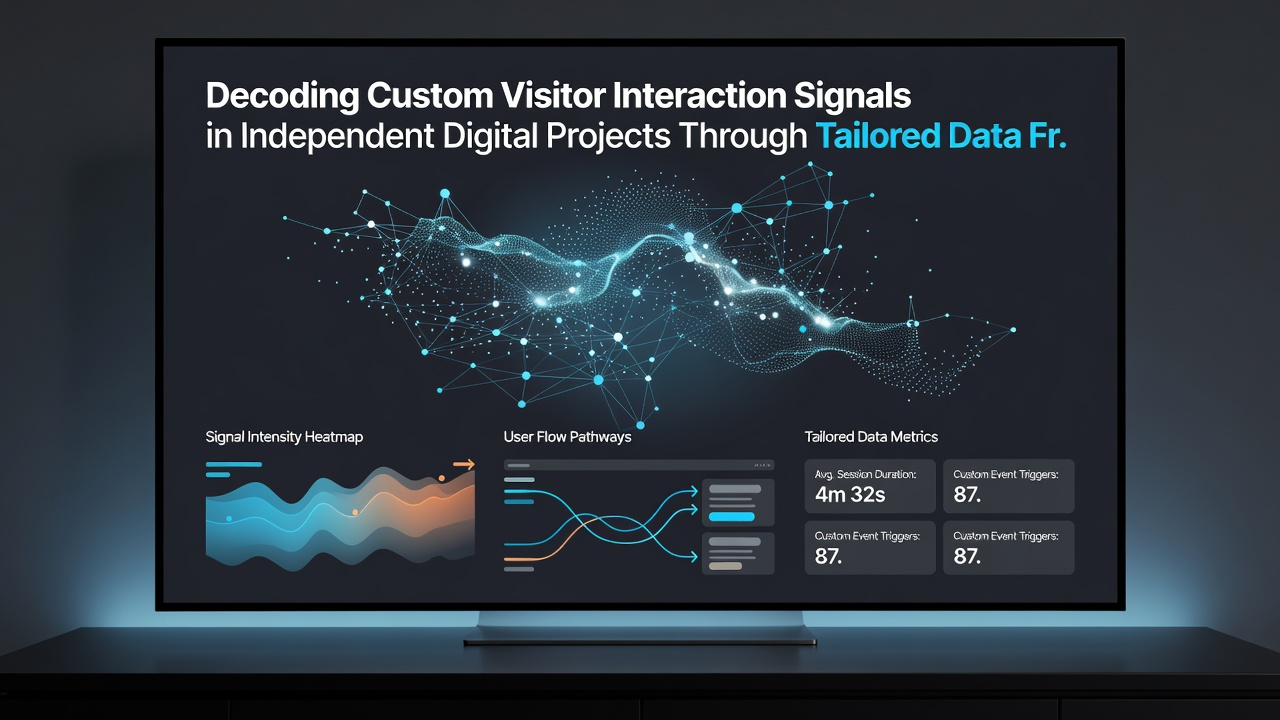
One study revealed that projects incorporating custom heat-mapping alongside time-based metrics uncovered navigation bottlenecks invisible to standard page-view counts. Those who've studied this process know the value lies in iterative refinement rather than one-time setup, because user behavior shifts with content updates and seasonal traffic changes.
Integration With Broader Analytics Ecosystems
Custom frameworks connect to wider analytics ecosystems through APIs that allow export of processed signals into visualization tools or machine-learning pipelines, and this connectivity supports longitudinal studies of engagement trends across multiple independent projects. Data shows that operators who maintain consistent naming conventions across signals achieve more reliable comparisons when evaluating performance between different content sections or time periods. Researchers discovered that combining first-party signals with publicly available benchmarks from sources such as Pew Research Center studies on digital engagement provides context without compromising site autonomy.
Challenges in Signal Interpretation
Interpretation challenges arise when signals contain noise from bots or rapid tab switching, and tailored frameworks address this through filtering rules that exclude sessions below minimum duration thresholds or flag anomalous click patterns. Observers note that privacy-compliant designs require regular audits of data collection points to align with evolving standards in regions such as the European Union and Canada. Evidence suggests that projects investing in documentation of their signal definitions reduce onboarding time for new team members and maintain consistency during staff transitions.
What's interesting is how these frameworks handle multi-channel attribution when visitors arrive via search, direct links, or referrals, because custom rules can assign credit based on project priorities instead of default models. Government statistical agencies like the Australian Bureau of Statistics digital activity reports illustrate broader patterns that independent operators sometimes reference when calibrating their internal thresholds.
Conclusion
Decoding custom visitor interaction signals through tailored data frameworks equips independent digital projects with precise tools for understanding engagement while preserving data ownership and flexibility. Continued refinement of event schemas, validation protocols, and integration methods supports accurate measurement as visitor behaviors evolve, and projects that document their processes position themselves to adapt frameworks efficiently when new interaction types emerge.